


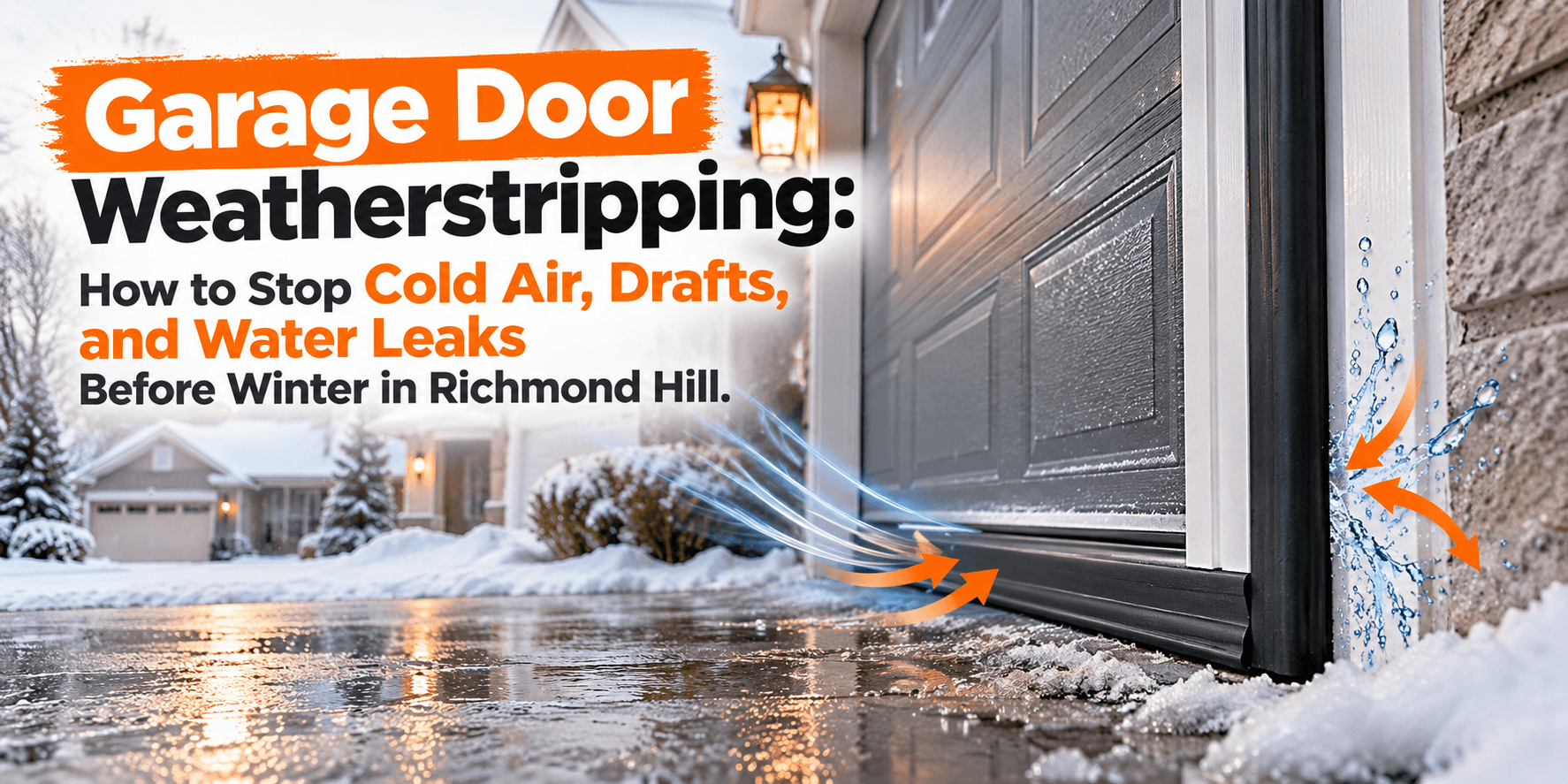
If there’s a cold draft creeping under your garage door or a puddle forming after every snowmelt, your weatherstripping is likely to blame. In Richmond Hill, where winters bring deep cold, blowing snow, and freeze-thaw cycles, the seals around your garage door are the quiet line of defence keeping the weather outside where it belongs. When they wear out, cold air, moisture, and even pests find their way in.
The good news is that worn garage door weatherstripping is one of the easiest and most affordable problems to fix before winter sets in. This guide covers why these seals matter, how to spot when they need replacing, the main types of weather seals, and the winter maintenance that keeps your garage warm, dry, and energy-efficient all season long.
Why Garage Door Weatherstripping Matters
Weatherstripping does a lot more than block a draft. A good set of seals protects your home and your wallet by preventing:
- Energy loss: gaps let heated air escape and cold air in, driving up your heating bills, especially with an attached garage.
- Water and snow intrusion: a failed bottom seal lets meltwater and snow blow under the door onto your garage floor.
- A freezing garage: poor seals make the space uncomfortable and can affect anything stored inside.
- Pests and debris: even small gaps are an invitation for rodents, insects, and blowing leaves.
In short, intact weatherstripping keeps your garage warmer, drier, and cheaper to heat, which matters all the more through a Richmond Hill winter.
Signs Your Garage Door Seals Need Replacing
Weather seals wear out gradually, so it’s easy to miss the signs until the cold arrives. Check for these before winter:
- Daylight visible around the edges or under the closed door
- Noticeable drafts or a cold garage even with the door shut
- Water, snow, or leaves getting in along the bottom
- Rubber seals that are cracked, brittle, flattened, or torn
- Gaps where the door meets the frame or the floor
- Rising heating costs with no other explanation
If you spot any of these, a garage door seal replacement is worth doing before the first hard freeze.
The Main Types of Garage Door Weather Seals
A garage door is sealed at several points, and each plays a role. Knowing them helps you find the leak.
Bottom seal
The garage door bottom seal is the rubber or vinyl strip along the base of the door, and it’s the hardest-working seal of all. It compresses against the floor to block cold air, water, and snow. Because it takes the most abuse, it’s the one that most often needs replacing.
Threshold seal
A threshold seal attaches to the garage floor rather than the door, creating a raised barrier that works with the bottom seal. It’s especially helpful on uneven floors or where water tends to run toward the garage.
Perimeter weatherstripping
The stop molding and weatherstripping along the sides and top of the door frame seal the gaps where the door meets the jamb. Cracked or missing perimeter seals are a common and often overlooked source of drafts.
Between-panel seals
On sectional doors, thin seals sit between the horizontal panels. These keep air from slipping through the joints as the door flexes, and they matter most on older or damaged doors.
How to Replace Garage Door Weatherstripping
Replacing a bottom seal or perimeter weatherstripping is a manageable project for a handy homeowner. The general process looks like this:
- Inspect and measure to identify which seals are failing and buy the correct type and length.
- Clean the area and remove the old, worn seal from the track or frame.
- Fit the new seal, sliding a bottom seal into its retainer or fastening perimeter strips along the frame.
- Test the door by closing it and checking for a snug, even seal with no gaps or daylight.
A quick safety note: Weatherstripping itself is low-risk, but if your door still won’t seal after new seals, the real issue may be an off-track door, a warped panel, or alignment problems. Never attempt to adjust or repair garage door springs or cables yourself, as they are under high tension. Leave those repairs to a professional.
If the gap won’t close no matter what you try, the door may not be sitting square. That can be a sign of a garage door off track or a damaged section that needs panel replacement, and a professional garage door repair will get it sealing properly again.
Garage Door Winter Maintenance Checklist
Weatherstripping works best as part of a wider winter tune-up. Before the cold really hits, run through this quick checklist:
- Inspect and replace worn weather seals and the bottom seal
- Lubricate rollers, hinges, and springs with a garage-door-rated lubricant
- Clear the tracks of dirt, ice, and debris
- Check that the door opens and closes smoothly and evenly
- Keep the safety sensors clean and unobstructed
Cold weather is hard on every part of a garage door, not just the seals. Our posts on why doors fail during heavy snowfall, why your opener struggles in cold weather, and how freezing conditions affect tracks and springs are worth a read as you prepare for the season.
Why Choose York Garage Door Guys
York Garage Door Guys provides garage door repair, maintenance, and installation across Richmond Hill and York Region, including Vaughan, Thornhill, Markham, Newmarket, Aurora, and beyond. From draft repairs and weather seal replacement to springs, openers, and panels, the team helps keep your garage door sealed, safe, and ready for winter.
If your door won’t seal out the cold, professional garage door repair in Richmond Hill will diagnose the real cause, and the right parts and accessories ensure a lasting fix.
Stop the Draft Before Winter
Cold air or water getting under your garage door? York Garage Door Guys repairs and replaces weather seals across Richmond Hill and York Region.
3300 Highway 7 W, Suite 600, Vaughan, ON L4L 1A6
Frequently Asked Questions
How often should garage door weatherstripping be replaced?
It depends on wear and exposure, but the bottom seal and perimeter weatherstripping should be inspected every year and replaced once they’re cracked, brittle, flattened, or letting in air and water. Checking in the fall means you catch problems before winter.
Why is cold air coming in even though my garage door is closed?
Usually it’s worn or missing weather seals around the bottom, sides, or top of the door. If new seals don’t solve it, the door may not be closing evenly due to an off-track issue or alignment problem, which a professional can correct.
Can I replace the garage door bottom seal myself?
Yes, replacing a bottom seal is a manageable DIY task for most homeowners: measure, buy the right seal, remove the old one, and slide the new one into the retainer. If the door still won’t seal, or the problem involves springs or tracks, call a professional.
Will new weatherstripping lower my heating bills?
Sealing the gaps around your garage door helps keep heated air in and cold air out, which can reduce energy loss, especially with an attached garage. It’s a small, affordable upgrade that pays off in comfort and efficiency through winter.
Who repairs garage door weather seals in Richmond Hill?
York Garage Door Guys handles garage door weather seal repair and replacement across Richmond Hill and York Region, along with full garage door repair and maintenance. Contact the team to get your door sealed and ready for winter.
